

Thank you for Subscribing to Insurance Business Review Weekly Brief

Costas Hadjipateras
Head of Underwriting, Shepherd
Experience Shaping Underwriting Leadership
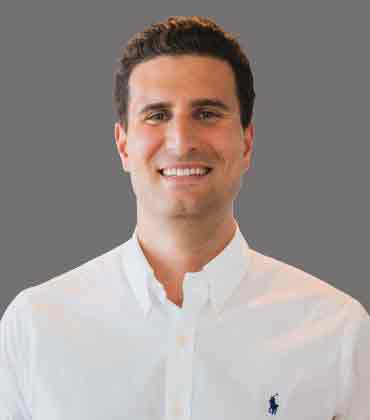
Costas Hadjipateras is an experienced insurance executive with a career spanning major-account construction, global casualty, middle-market underwriting and MGU. His diverse experience has shaped a disciplined approach to complex commercial risks, combining technical underwriting expertise with practical business judgment.
Costas Hadjipateras’s career spans majoraccount construction, global casualty, middle-market underwriting and building an MGU. He started at ACE, which later became Chubb, as a construction underwriting trainee, handling accounts for major contractors with at least USD 750 million in revenue. His work involved loss-sensitive programs, deductibles, self-insured retentions, collateral and risk financing, giving him experience in the financial and operational demands of construction underwriting.
Hadjipateras transitioned internally from construction to foreign casualty underwriting, working with global insureds and following liability trends across Asia, Europe and Australia. He later joined Hartford, where his work covered middlemarket underwriting, excess and property lines. These roles gave him experience across different markets and types of risk.
“All the roles prior, whether they be at early days of ACE to Chubb to Hartford, they’ve all played a hand in preparing me as best as possible for the role that I hold today,” says Hadjipateras.
Hadjipateras brought that experience to Shepherd, where he joined as the third employee and first underwriter during COVID-19 and a hard insurance market. He helped secure capacity and build the underwriting operation. Five and a half years later, he leads 30 underwriters across five offices and oversees primary and excess casualty, builder’s risk, renewable energy and power.
A Surgical Approach to Risk
For Hadjipateras, construction underwriting requires precision. “The secret to construction is really being surgical in how you approach each account,” he says. A general contractor presents a different risk from an HVAC, mechanical or electrical specialist. Underwriting also varies between ongoing contractor operations and project-specific arrangements, including owner-controlled, contractor-controlled and joint-venture wrap-up programs. All the roles prior, whether they be at early days of ACE to Chubb to Hartford, they’ve all played a hand in preparing me as best as possible for the role that I hold today.
Hadjipateras assesses what the insured does and where it operates. Jurisdiction matters because legal environments and outcomes vary. He scrutinizes auto liability amid nuclear verdicts and social inflation, while considering fleet safety, telematics and other risk-mitigation measures.
These decisions shape Shepherd’s overall portfolio. Hadjipateras focuses on profitable growth while remaining a reliable partner to insurers and brokers. In its first year, Shepherd kept premium volume modest as it tested its platform and policy issuance processes. It risk-tiers every submission and declines most of the business it evaluates, focusing on long-term portfolio health over premium growth.
Hadjipateras also distinguishes between primary and excess casualty. Excess underwriting focuses on limits, capacity deployment and pricing adequacy, while primary casualty requires attention to coverage breadth, carrier terms and retentions. “Exercising discipline requires experience,” he says. The goal is a portfolio capable of supporting claims years after policies are written.
Balancing Technology with Experience
Shepherd believes that contractors using risk-mitigation technologies can outperform peers who do not use them. Hadjipateras’s team evaluates tools such as Procore, Autodesk, OpenSpace and DroneDeploy to understand how contractors use them to manage risk.
Through its Shepherd Savings program, Shepherd offers pricing credits to reward contractors for investing in these solutions. The program is informed by Shepherd’s own data and actuarial analysis, which indicate that these technologies can have a real impact on loss outcomes. Shepherd also considers how contractors use the tools alongside their loss history, safety programs and fleet safety.
The growing scale of data center projects raises concerns about aggregation exposure. Hadjipateras considers project location, the relationship between owners and contractors, their experience with complex projects and their use of technology for safety and risk management. These considerations carry greater weight as multi-billion-dollar projects become more common.
He also sees AI as a way to automate clerical work and process large datasets, but believes it should remain a tool rather than replace industry knowledge and experience. He emphasizes training, development and lessons from previous hard and soft market cycles to prepare both experienced and newer underwriters.
From assessing construction risks at the account level to evaluating risk-mitigation technologies and selectively accepting submissions, Hadjipateras brings the judgment and technical depth that distinguish him as one of the Top 10 Underwriting Leaders of 2026.
