
Thank you for Subscribing to Insurance Business Review Weekly Brief


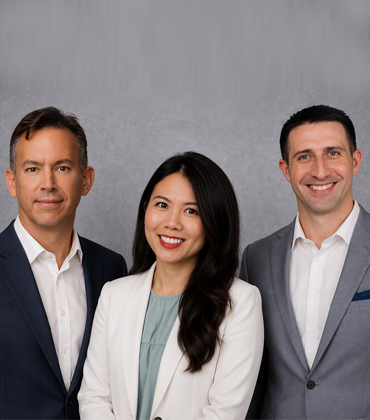 Chris Waddington, Managing Director and Head of EMEA Tax, Wai Ling Low, SVP, APAC Tax and Justin Berutich, Executive Director, Head of Tax
A defensible tax position does not always make a decision easy. The uncertainty over how much a challenge could ultimately cost can be enough to slow a transaction, complicate a restructuring or put a valuable opportunity on hold. Tax liability insurance can transfer the financial consequence of that uncertainty, giving businesses greater confidence to proceed with a supportable position. Its value, however, is not limited to shifting the risk. The right policy converts an open-ended exposure into a defined, quantifiable cost, which can make a difficult commercial decision materially easier to approve.
That is the lens Euclid Transactional brings to each matter. Named Tax Liability Insurance Company of the Year in back-to-back years, for 2025 and again for 2026, the firm has applied that approach consistently as its practice has scaled. It provides bespoke tax liability insurance to private equity firms, multinational corporations, institutional investors, family offices and other sophisticated taxpayers. The starting point is not the insurance policy but what the client is trying to accomplish. That commercial mindset keeps the underwriting focused on the decision the client needs to make, rather than treating the tax position in isolation. Euclid considers the facts, applicable law, existing advice, potential exposure, timing and the interests of the parties involved before determining how the risk should be covered. In this approach, insurance becomes part of the transaction strategy rather than a separate exercise in risk management.
“Tax insurance is not an off-the-shelf insurance product. Tax insurance is a bespoke, strategic tool designed to create certainty around a supportable tax position,” says Justin Berutich, Executive Director, Head of Tax.
That philosophy has underpinned Euclid’s evolution from a small specialist tax practice into a platform built on specialist depth. The goal has remained giving clients access to professionals with experience across a broad range of tax issues, industries and major jurisdictions, while creating a clearer decision-making environment around a supportable tax position.
Expertise Built for Complex Tax Risk
Tax positions rarely fit neatly within a single jurisdiction or category. A complex matter may involve advisors in different countries, several tax authorities and competing interpretations. Accordingly, tax insurance requires professionals who understand tax law, insurance structures and commercial objectives and can approach each matter on its own terms. Euclid brings those perspectives together around a single risk, so that complex matters receive both technical tax analysis and disciplined insurance judgment.
Over the past year, Euclid’s global tax team grew from 21 professionals to more than 25 tax specialists across North America, EMEA and APAC. The continued growth and breadth of experience supports evaluation of a broad range of tax issues across industries and major jurisdictions, while its globally connected platform allows the professionals most relevant to a matter to collaborate in real time. The team has also surpassed USD 22 billion in cumulative policy limits placed since inception, evidence of the scale and maturity of that underwriting experience.
Tax insurance is not an off-the-shelf insurance product. Tax insurance is a bespoke, strategic tool designed to create certainty around a supportable tax position.
Underwriting Around the Business Decision
That global depth informs an underwriting model built around the client’s business decision. Once Euclid understands the objective, it evaluates the technical and commercial considerations surrounding the opportunity and tailors the insurance structure accordingly. Because the team approaches each matter with a commercial mindset, the process is tailored to the specific opportunity rather than driven by a formulaic, standardized model.
The bespoke nature of the approach comes from tailoring the solution to the circumstances of each matter. A position arising from an acquisition may require a different structure from one connected to a restructuring, tax credit or strategic planning initiative. Limit, retention, duration and policy wording are calibrated to the specific exposure rather than applied from a standard form.
“One of the advantages of our connected platform is that we can draw upon professionals with specialized experience relevant to the specific issue being evaluated,” adds Wai Ling Low, SVP, APAC Tax.
Clients’ recurring feedback centers on responsiveness, expertise, collaboration and commerciality. The feedback reinforces the commercial mindset behind the underwriting model: Euclid is designed to understand the matter quickly, coordinate the appropriate perspectives, and develop solutions rather than simply highlight problems.
Tax Insurance as a Strategic Tool
Tax insurance is still often associated with M&A, which remains an important part of the market. However, Euclid’s broader view starts from a different premise, recognizing that tax uncertainty can arise whenever a business decision intersects with tax law. The company applies its approach to strategic tax planning, corporate restructurings, renewable energy tax credits, transfer pricing and cross-border matters.
 Critically, those situations do not require a buyer, seller or transaction deadline. Tax insurance can therefore serve as a planning tool, not only as transaction protection. Greater awareness has helped tax insurance become a risk-management tool inside and outside M&A, and Euclid sees this broader application as an important opportunity for the continued evolution of the market.
A Partnership That Continues After Underwriting
When an insured tax position is challenged, Euclid’s philosophy is one of alignment. The company insured the position because it and the policyholder believed it was proper and well-supported.
“Our interests and the insured’s are fully aligned. We insure tax positions because we believe in them, and we stand behind those positions with conviction,” says Berutich. Claims are, therefore, not adversarial. Underwriting and claims sit within the same organization and remain in close communication. Claims professionals bring real-world experience of how tax disputes develop and what policyholders encounter during controversies; those lessons can inform future underwriting decisions and policy wording. In turn, underwriting knowledge gives the claims team a clear understanding of the risk that was originally assessed.
-
Our interests and the insured’s are fully aligned. We insure tax positions because we believe in them, and we stand behind those positions with conviction.
That structure produces measurable results. Euclid has the industry’s largest claims team with 30 full time claims professionals, and the team has facilitated the payment of more than USD 1.8 billion across its transactional liability book.
For the policyholder, that alignment means continuity when a tax authority raises a question. Euclid coordinates with the insured, advisors and broker partners as matters move through audit, appeals, litigation or settlement discussions, helping navigate what can otherwise be a stressful and time-consuming process.
Creating Certainty Where It Matters Most
In one recent cross-border restructuring, a client faced approximately USD 50 million in potential tax exposure if tax authorities disagreed with the intended tax treatment. Although the position was well-supported, the complexity of the matter required coordination among advisors located in multiple jurisdictions and consideration of differing tax authority perspectives.
Euclid evaluated the opportunity, brought together the relevant perspectives and structured an appropriate policy. The insurance transferred a potentially significant financial consequence to the insurance market, providing the client greater confidence to focus on its commercial objectives while retaining the flexibility to pursue the intended restructuring.
Euclid bound more than 60 tax policies in the second quarter of 2026 alone. Alongside record submission activity and record policy production across multiple consecutive periods, the figure reflects the frequency with which the team is applying its approach to complex tax matters and the growing adoption of tax insurance.
 Tax authorities’ enforcement, information sharing and scrutiny continue to intersect with evolving international tax regimes, tax credits, transfer pricing and cross-border structures. As tax risk becomes more global, businesses face uncertainty precisely when a supportable tax position may be important to a strategic decision. That is creating a wider role for tax insurance in restructurings, tax credit transactions, strategic tax planning and other situations where certainty can create meaningful commercial value.
As tax insurance expands beyond M&A, Euclid helps clients use it not only to transfer risk, but to make complex decisions with greater confidence. Its integrated claims model extends that support beyond underwriting, giving clients continuity when a tax position is challenged.
That approach reflects a broader objective: building a team capable of bringing together the technical expertise, global collaboration and commercial judgment needed to evaluate increasingly complex tax matters across industries and jurisdictions. The growth of its specialist bench, the more than USD 22 billion in cumulative policy limits placed, and the expanding use of tax insurance beyond traditional M&A transactions reflect the continued maturation of both Euclid’s practice and the broader market.
By combining specialist depth with a globally connected and collaborative approach, Euclid is positioned to help clients navigate the increasingly interconnected nature of tax risk—from the initial commercial decision through the life of the policy. It is also the context for this year’s recognition: Euclid Transactional has been named Tax Liability Insurance Company of the Year for 2026 by Insurance Business Review, having received the same distinction for 2025. Consecutive recognition reflects not a single strong year but the consistency of the platform, the people and the claims commitment behind it.
Insuring Tax Exposure without Slowing Decisions
A supportable tax position can still hold up a restructuring or complicate a deal, leaving management with an exposure that is difficult to price internally. Tax liability insurance has become useful precisely in that gap between technical confidence and financial certainty. The buying decision is less about finding capacity than determining whether an insurer can understand a complex position quickly enough to make coverage commercially useful without flattening the legal nuance that makes the risk insurable.
Technical judgment should carry the most weight. A credible underwriter needs to test the relevant facts, governing law, existing advice and potential exposure, then translate that work into policy terms that match the actual risk. Generic diligence is a warning sign. Tax questions can turn on entity structure, jurisdictional treatment, transaction mechanics or a narrow point of interpretation, so the insurer must be able to bring in specialists without restarting the review each time a matter crosses a border or tax discipline. Depth matters most when it reduces handoffs and keeps the analysis tied to the client’s decision window.
Process design matters for the same reason. Bespoke coverage becomes less useful if underwriting creates its own delay. Executives should look for a team that engages directly with brokers and advisers, identifies the decisive questions early, keeps documentation focused and avoids unnecessary rounds of review. Commercial judgment belongs alongside technical rigor. The insurer has to distinguish between a position that needs more evidence and one that is already sufficiently supported but difficult to accept on a balance sheet. The distinction affects both timing and the practicality of the policy.
“Euclid Transactional keeps underwriting and claims closely aligned, giving the policyholder continuity if an insured position is later challenged.”
Claims handling deserves equal scrutiny before a policy is bound. A tax authority challenge can move from audit to appeals, litigation or settlement, and the insured should know how the carrier behaves once the original underwriting file becomes a live controversy. Separation between underwriting intent and claims interpretation can create friction at the worst point in the relationship. Buyers should examine whether claims professionals understand the reasoning behind the insured position and whether the carrier remains involved as the dispute develops rather than treating the policy as a static contract.
Cross-border exposure adds another layer. Tax risk increasingly sits across jurisdictions, while insurance decisions often need to be made on transaction timelines or during broader tax planning. A provider therefore needs specialist reach that can follow the issue rather than forcing the client to coordinate disconnected regional reviews. The same discipline applies outside M&A, where restructurings, tax credits, transfer pricing positions and other planned tax matters may benefit from certainty even without a buyer or seller setting the clock.
Euclid Transactional stands out as a leading option for buyers facing these pressures. Its dedicated tax insurance practice draws on specialists across major global regions, allowing matters to be evaluated with jurisdiction-specific input while remaining within one connected team. It also applies tax liability insurance beyond M&A to areas including strategic tax planning, restructurings, tax credits and cross-border issues. Its underwriting is tailored to the specific position rather than forced through a standardized review. Euclid Transactional keeps underwriting and claims closely aligned, giving the policyholder continuity if an insured position is later challenged. For executives prioritizing specialist depth and continuity between underwriting and claims, Euclid Transactional warrants serious consideration.
...Read more
Tax Liability Insurance Companies Info
Q1
What Are Tax Liability Insurance Companies?
Tax Liability Insurance Companies help organizations manage financial exposure when a tax position could be challenged by an authority. Coverage can convert an uncertain potential liability into a defined insurance cost, supporting decisions involving transactions, restructurings, tax credits, transfer pricing or other tax matters. The value depends on careful assessment of the facts, applicable law, existing advice and potential exposure rather than a standard policy structure. It can also help decision-makers compare coverage costs with the financial consequence of leaving a tax position uninsured.
Q2
How Does Euclid Transactional Approach Tax Liability Insurance Companies?
Euclid Transactional provides bespoke tax liability insurance for private equity firms, multinational corporations, institutional investors, family offices and other sophisticated taxpayers. Its underwriting considers the client's commercial objective alongside the tax position. Its global tax team has grown from 21 professionals to more than 25 across North America, EMEA and APAC, giving Tax Liability Insurance Companies a model for combining specialist tax knowledge with insurance judgment. The profile also notes more than USD 22 billion in cumulative policy limits placed since inception.
Q3
When Is Tax Liability Insurance Useful Outside M&A?
Tax Liability Insurance Companies can support decisions that do not involve a conventional acquisition or sale. These include corporate restructurings, strategic tax planning, renewable energy tax credits, transfer pricing and cross-border matters. In such cases, the purpose is not simply transaction protection. Insurance can provide greater financial certainty around a supportable tax treatment when the underlying business decision still needs to move forward. This makes tax insurance relevant when timing is driven by planning needs rather than a transaction deadline.
Q4
What Should Buyers Examine When Evaluating a Tax Insurance Provider?
The main considerations are technical tax expertise, understanding of the relevant jurisdictions, policy design and the insurer's ability to tailor coverage to the actual exposure. Limit, retention, duration and wording may need to change from one matter to another. Tax Liability Insurance Companies should also be able to bring the right specialists into a review when a matter crosses jurisdictions or involves a narrow technical issue. Buyers can also examine how clearly the insurer explains exclusions and the boundaries of the insured position.
Q5
How Does Euclid Transactional Handle Claims After Underwriting?
Euclid Transactional keeps underwriting and claims within the same organization and maintains close communication between the functions. Its claims team includes 30 full-time professionals and has facilitated more than USD 1.8 billion in payments across its transactional liability book. For Tax Liability Insurance Companies, this integrated structure illustrates how knowledge from underwriting can inform claims handling while claims experience can feed back into future underwriting and policy wording. The approach maintains continuity when a tax authority challenges an insured position.
Q6
How Can Tax Liability Insurance Companies Create Greater Commercial Certainty?
The practical benefit is to make a difficult exposure easier to quantify before a decision is made. In one cross-border restructuring described in the profile, Euclid addressed approximately USD 50 million in potential tax exposure by structuring a policy around the client's intended tax treatment. The firm also bound more than 60 tax policies in the second quarter of 2026. For Tax Liability Insurance Companies, these examples show how coverage can extend beyond risk transfer to support transactions, planning and restructuring decisions.
Company : Euclid Transactional
ManagementChris Waddington, Managing Director and Head of EMEA Tax, Wai Ling Low, SVP, APAC Tax and Justin Berutich, Executive Director, Head of Tax