
Thank you for Subscribing to Insurance Business Review Weekly Brief

Commonwealth Casualty Company
Scott D. Harris, Chief Claims Officer
Building Organization through Trust and Decisive Leadership
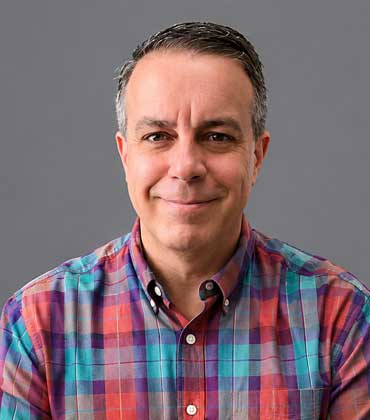
Scott D. Harris
Scott D. Harris is an experienced claims management leader known for developing diverse teams and fostering strong morale. His leadership focuses on maintaining high standards of service quality while strengthening team engagement and organizational performance.
Building a Culture of Excellence
My experience has been that high-performing, championship-level teams almost never happen by accident. Instead, they are a consequence of both a focus on excellence and an unrelenting intolerance for mediocrity. In other words, ‘good enough’ is the enemy of ‘great,’ especially when it comes to personnel. Not everyone is willing to do what is necessary to be a ‘great’ performer.
That's ok in some situations, but if the goal is to build a high-performing organization, that's not what you want, and you can't tolerate it. High-performers are energized by being around other high-performers, and that creates a kind of electric environment where people are consistently pushing the boundaries of what is achievable. That is the kind of world that I enjoy creating.
Balancing Profitability, Accountability and Growth
Championship claims organizations can balance profitability, quality and growth when they understand that none of these categories are mutually exclusive; in fact, most are mutually supportive.
High-performers are energized by being around other high-performers, and that creates a kind of electric environment where people are consistently pushing the boundaries of what is achievable.
For me, it comes down to four questions: Do I understand what we need to do to improve the company’s profitability? Do I ensure the organization consistently practices financial discipline and accountability? Do I ensure we make sound decisions in a timely manner? And do I foster a boundary-less organization that operates without silos? If the answer to all four is yes, we are generally well-positioned to achieve our objectives.
Making Informed Decisions under Uncertainty
The most important thing handling complex and high-exposure claims has taught me is that effective leaders cannot rely too much on the acumen or expertise of others. If you own the decision, you must be knowledgeable enough from a coverage, liability or damages perspective to understand the question at hand as well as anyone else in the room.
Second, effective risk management usually requires you to critically analyze competing priorities in conflict with each other. Sometimes the best decision may be the ‘least bad’ option. Finally, I have learned that you cannot avoid choices; people are expecting you to make a decision, and you have to step up and lead.
Technology can make an efficient process even more effective and serve as a force multiplier for strong claims organizations. In the 21st century, successful claims management depends on leaders who understand how to deploy technology strategically to improve performance and outcomes.
Empowering Leaders to Find Their Own Solutions
Much of maintaining strong morale, service quality and accountability across diverse claims teams comes down to personnel selection and developing a strong level of trust between you and your subordinate leaders. I try to find personnel where ‘the fire lights itself,’ where they are intrinsically motivated to do well because that's just how they are wired.
Once you have those people, take them into your confidence to the extent possible. Give them the ‘why’ behind the decisions, but resist the temptation to provide too much specific direction in terms of how to accomplish each objective. We want them to come up with solutions because they know their personnel and resources better than you do. Nothing you do can replace their sense of achievement when they accomplish something without you telling them how to do it.
The articles from these contributors are based on their personal expertise and viewpoints, and do not necessarily reflect the opinions of their employers or affiliated organizations.
